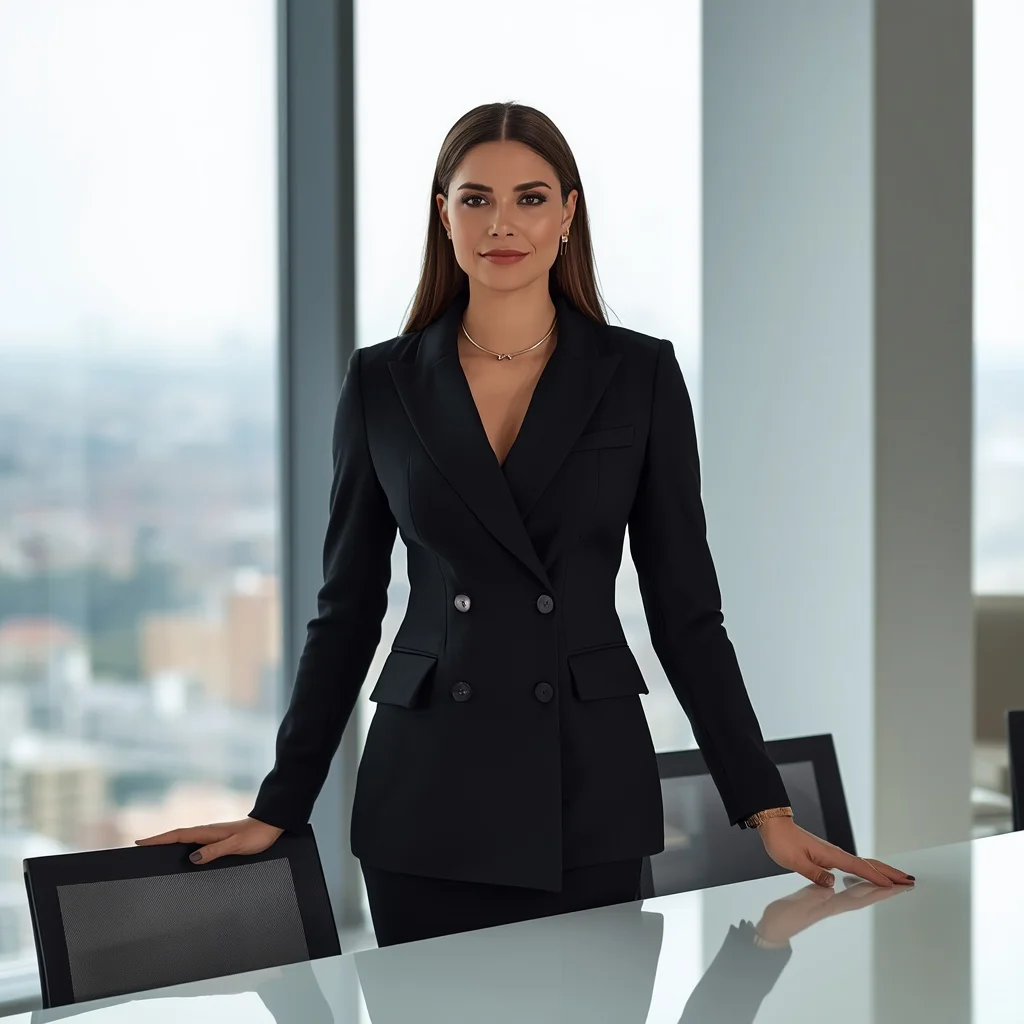

A Joyful Woman Laughing in a Bright Red Structured Mini Dress | Gemini Prompt
The 'Joyful Woman Laughing in a Bright Red Structured Mini Dress' prompt is a masterclass in controlled 3D portraiture. It blends hyper-realistic rendering with a playful, surreal presentation, making the subject feel both tangible and impossibly crisp. You are not just describing a person; you are engineering a precise visual illusion where texture, light, and composition work together to create a polished, commercial-grade image.
This prompt is designed for AI image generators that excel at photorealistic 3D renders, such as Gemini, Midjourney, and Leonardo AI. The detailed instructions cover everything from fabric structure and facial consistency to the unique torn-paper framing device. Whether you are a digital artist, a content creator, or simply exploring AI's capabilities, understanding how this prompt functions will sharpen your own prompt-writing skills and help you achieve cleaner, more intentional results.
What this laughing-woman prompt is asking for
At its core, this prompt instructs the AI to generate a high-resolution 3D render of a beautiful woman laughing, presented in a surreal, pop-out style. The image must maintain identical facial features across any implied frames, and the subject should appear to burst through a torn paper hole. The composition is tightly controlled: a chest-up view in a 4:5 vertical aspect ratio, set against a pure white background with soft studio lighting.
- A beautiful woman laughing with a joyful, open expression and consistent facial identity.
- A bright red, structured mini dress with a tailored, sculptural silhouette.
- A torn paper hole with realistic, ripped edges wrapping around her half-body for a 3D pop-out effect.
- A subtle light grey gradient visible inside the paper hole behind the subject.
- Soft studio lighting that creates smooth highlights and avoids harsh shadows.
- A pure white background, crisp and free of any gradient or color shift.
How the scene is composed
Why this prompt works so well
This prompt succeeds because it layers precise technical constraints with a strong emotional hook. The AI is not left guessing about lighting, framing, or the surreal paper effect; every element is spelled out with measurable descriptors like "high-resolution," "sharp," and "polished 3D render." The result is an image that feels both professionally staged and dynamically alive, making it versatile for portfolios, advertising mockups, or social media content.
- The torn-paper illusion adds a tactile, handcrafted feel to an otherwise digital render, increasing visual interest.
- Specifying 'identical facial identity and features across all frames' prevents the common AI issue of inconsistent faces in complex compositions.
- The combination of a pure white background and soft studio lighting guarantees a clean, distraction-free image that works for commercial use.
Three visual styles you can apply
While the prompt already defines a polished 3D render style, you can steer it toward three distinct aesthetic directions without breaking the core concept. These variations keep the torn-paper frame and red dress intact while altering the texture and mood of the final image.
- Hyper-realistic photography: Push the render toward an unedited DSLR look by adding terms like 'Canon EOS R5, 85mm lens, f/1.8, subtle film grain' to mimic a real photoshoot.
- Vibrant vector illustration: Flatten the 3D depth with 'clean vector art, bold cel shading, crisp outlines' to turn the laughing woman into a modern graphic poster.
- Soft anime-inspired 3D: Blend realism with stylization using 'smooth cel-shaded skin, large expressive eyes, soft pastel rim light' while keeping the dress structured.
How to generate this image step by step
Producing a clean result with this prompt requires attention to the AI tool's settings and a methodical approach. Follow these six steps to minimize errors and get a render that matches the detailed description as closely as possible.
- Copy the full prompt. Select and copy the entire prompt text exactly as provided, preserving all commas, quotation marks, and technical terms.
- Set the aspect ratio. In your AI tool, manually set the aspect ratio to 4:5 (vertical) to match the prompt's framing requirement before generating.
- Upload a reference photo. If the tool supports image input, upload a clear photo of a person with a similar face shape and hairstyle to guide facial consistency.
- Generate initial images. Run the prompt and produce at least four variations to compare how different seeds handle the torn paper and lighting.
- Check the face and hands. Zoom in on the laughing expression, teeth, and any visible fingers to ensure they are anatomically correct and free of distortion.
- Inspect the dress structure. Verify that the red mini dress looks tailored and sculptural, not flat or melted, and that the fabric catches light realistically.
Using a reference photo for better results
Providing a reference image can dramatically improve the consistency of the subject's face and the overall composition. The AI uses the photo as a structural guide, not a direct copy, so you retain the prompt's stylistic choices while grounding the anatomy in reality.
- Choose a well-lit headshot with a clear, unobstructed view of the face and shoulders, ideally against a plain background.
- Match the reference's expression to the prompt's 'joyful, infectious laughter' to help the AI map the correct muscle movements.
- Ensure the reference photo is high-resolution and sharp; a blurry source image will introduce softness into the final 3D render.
AI tools best suited for this prompt
Different AI image generators interpret the same prompt with varying degrees of realism and structural accuracy. The table below compares four popular tools and their strengths when generating this laughing-woman render.
| Tool | Access | Typical realism | Useful here for |
|---|---|---|---|
| ChatGPT | DALL·E integration | High, illustrative | Rendering the torn paper hole with realistic ripped edges and consistent facial identity |
| Google Gemini | Free and paid tiers | Very high, photographic | Achieving the ultra-clean, sharp, polished 3D render with soft studio lighting |
| Leonardo AI | Freemium, web-based | High, cinematic | Controlling the subtle light grey gradient inside the paper hole and the 4:5 framing |
| Midjourney | Paid, Discord-based | Exceptional, artistic | Perfecting the bright red structured mini dress texture and the pure white background |
Three tips to refine your render
Small adjustments to the prompt or your workflow can fix common artifacts and elevate the final image. These tips focus on the specific materials and objects named in the prompt to keep your results on track.
- Emphasize the 'structured mini dress' by adding 'thick scuba fabric, visible seam lines' to prevent the AI from generating a flat, painted-on garment.
- Use negative prompts like 'no harsh shadows, no dark background, no distorted face' to reinforce the 'soft studio lighting' and 'pure white background.'
- If the torn paper edges look digital, add 'fibrous paper texture, rough uneven tears' to enhance the tactile, handmade illusion.
Common issues and how to fix them
Even with a detailed prompt, AI generators can misinterpret certain elements. The table below addresses four frequent failures and the specific changes you can make to correct them.
| Issue | What to change |
|---|---|
| The torn paper hole looks like a flat digital cutout | Add 'thick cardstock paper, layered torn edges, visible paper fibers' to the prompt |
| The woman's face shifts identity or appears distorted | Add 'perfect facial symmetry, single consistent person, no face morphing' and use a reference image |
| The background shows a gradient or off-white tint | Reinforce with 'pure #FFFFFF background, zero gradient, absolutely no color cast' |
| The red dress lacks structure and looks like a generic red top | Specify 'structured corset-style mini dress, boning details, architectural tailoring' |
Frequently Asked Questions
Can I change the color of the mini dress in this prompt?
Yes, you can replace 'bright red' with any color, but keep the word 'structured' to maintain the tailored silhouette. For example, 'electric blue structured mini dress' works well, while simply saying 'blue dress' may result in a less defined garment.
Why does the torn paper effect sometimes fail to appear?
Some AI models deprioritize surreal framing elements if they conflict with the main subject. To fix this, move the torn paper description to the very beginning of the prompt and add weight to it, such as 'prominent torn paper hole in the foreground, dominating the composition.'
Is this prompt suitable for generating images of men or non-binary people?
Absolutely. Replace 'beautiful woman' with 'handsome man' or 'striking person' and adjust the clothing description accordingly, such as 'bright red structured blazer.' The lighting, framing, and paper effect remain universally applicable.
Conclusion
The 'Joyful Woman Laughing in a Bright Red Structured Mini Dress' prompt is a powerful template for creating polished, emotionally engaging 3D renders. Its strength lies in the specificity of its visual language, from the torn-paper illusion to the exacting lighting and background requirements. By following the steps, applying the style variations, and troubleshooting common issues, you can consistently generate images that look professionally crafted. Whether you use it as-is or adapt it for different subjects and colors, this prompt demonstrates how thoughtful detail transforms an AI-generated picture into a striking piece of digital art.
Remember to use a photo you have the rights to edit, ensuring your creative process stays ethical and worry-free.