

Best 10 Saree with Traditional Hairstyle AI Prompts for Authentic Looks
Capturing the essence of Indian heritage through AI image generation requires a delicate balance of fabric texture, cultural accuracy, and lighting. This collection of ten prompts focuses on women wearing traditional sarees paired with specific, authentic hairstyles. Each prompt is designed to guide your AI model toward a distinct mood, whether it is the majestic grandeur of a palace courtyard or the relaxed warmth of a morning balcony.
By using these structured descriptions, you can move beyond generic outputs and generate images that feel deeply rooted in tradition while maintaining a modern aesthetic appeal. The variety here ensures that you have options for different occasions, from festive celebrations to casual, everyday moments, all centered around the timeless beauty of the saree.
What this collection of saree prompts is asking for
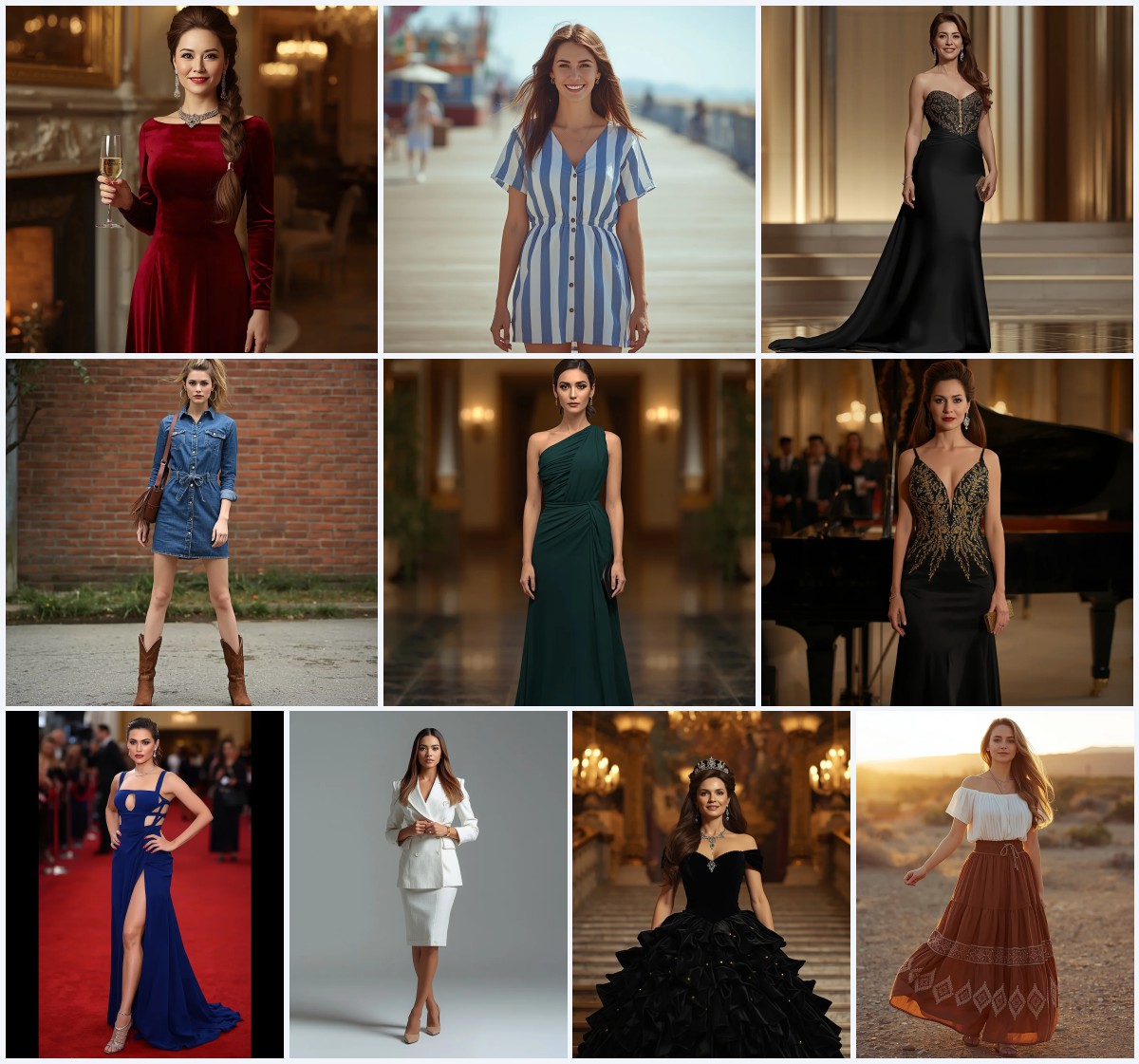
This set of ten prompts requests full-body portraits of Indian women wearing various types of pastel-toned sarees, each paired with a specific traditional hairstyle. The core requirement across all entries is the combination of a culturally accurate garment with a defined hair styling choice that complements the outfit's formality and setting.
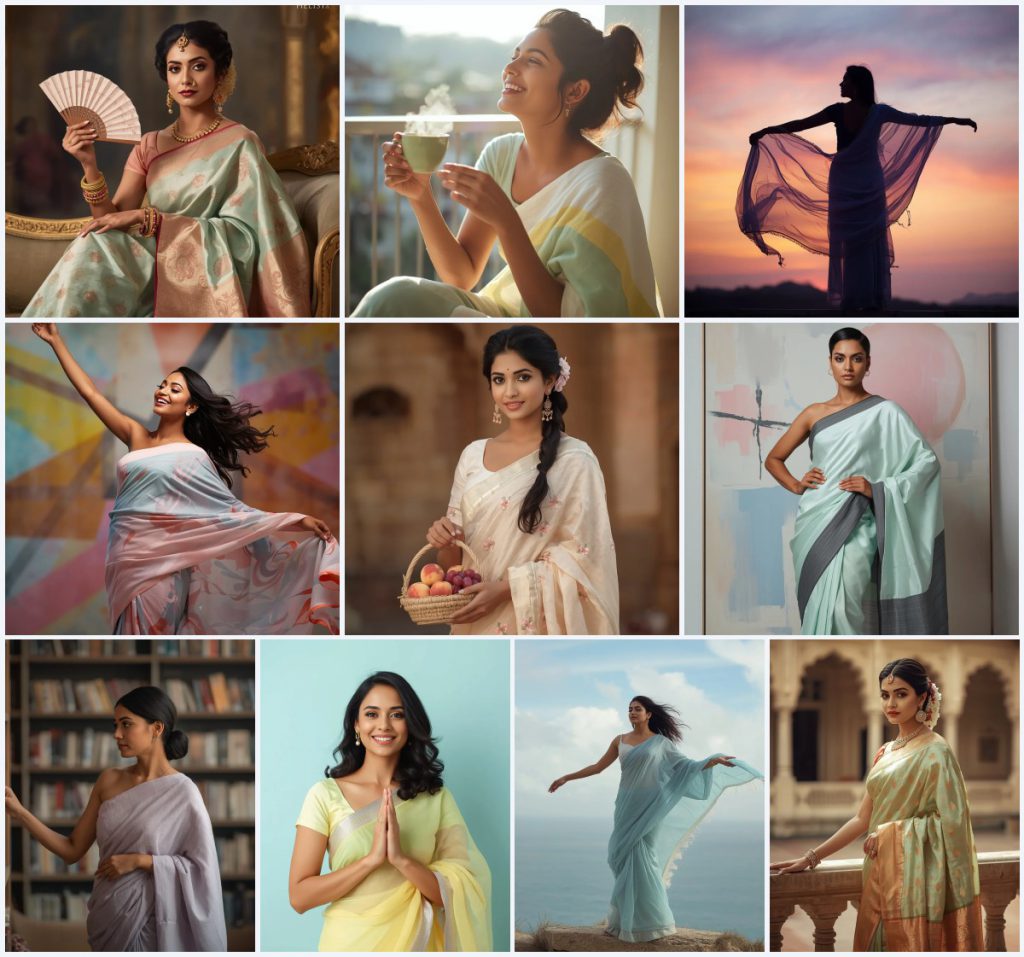
- A luxurious pastel Banarasi silk saree with gold motifs and an ornate traditional bun.
- A comfortable pastel cotton saree in light green and cream with a messy bun.
- A flowing pastel georgette saree in twilight lavender with windswept long dark hair.
- A classic pastel peach cotton saree with floral embroidery and a braid adorned with fresh flowers.
- A structured pastel raw silk saree in turquoise and grey with a sharp asymmetrical bob.
- A soft pastel chiffon saree in sunny yellow with loose, bouncy waves framing the face.
The visual scene across the ten prompts
Each prompt establishes a unique environment that matches the woman's attire. For instance, one scene describes a woman sitting gracefully on an "ornate, antique divan" while holding a "pastel-colored hand fan." This setting immediately communicates a sense of historical luxury and royal dignity, grounding the subject in a specific cultural context.
In contrast, another prompt places the subject on a "sunlit balcony," holding a "steaming cup of coffee or tea" with her gaze directed towards the rising sun. This creates a completely different atmosphere, one of domestic comfort and serene joy. The shift from the formal divan to the casual balcony highlights how the background and props define the narrative of the image.
Why these specific details matter
Including specific details about the saree fabric and hairstyle is crucial for achieving authenticity in AI-generated images. Without these constraints, models often default to generic or inaccurate representations of South Asian clothing and grooming.
- Specifying the fabric type, such as "Banarasi silk" or "cotton," helps the AI render the correct drape, sheen, and weight of the material.
- Defining the hairstyle, like a "classic braid" or "messy bun," ensures the character's look aligns with the cultural and temporal context of the scene.
- Describing the pose and expression, such as a "dignified and statuesque" posture, guides the AI to capture the intended emotional tone and body language.
Three distinct stylistic approaches in this set
These prompts utilize three primary photographic styles to enhance the visual impact of the saree and hairstyle combinations.
- Regal Portrait: This style uses formal poses and rich fabrics like silk to convey majesty and traditional elegance.
- Casual Lifestyle: This approach features relaxed settings and comfortable cotton sarees to depict everyday warmth and natural beauty.
- Artistic Silhouette: This technique relies on dramatic lighting and flowing fabrics to create striking, high-contrast visual compositions.
How to use these prompts effectively
To get the best results, follow a systematic process that integrates the text prompt with reference materials and careful post-generation review.
- Copy Prompt. Select one of the ten prompts and copy the full text into your AI image generator's input field.
- Upload Reference. If using a tool that supports image-to-image, upload a photo of a similar saree or hairstyle to guide the structure.
- Generate Image. Click the generate button and allow the model sufficient time to process the complex details of the fabric and hair.
- Check Hands. Inspect the generated hands closely, as they are prone to distortion when holding objects like fans or cups.
- Verify Face. Ensure the facial features are symmetrical and the expression matches the described mood, such as serene or joyful.
- Review Main Object. Confirm that the saree's pattern and the specific hairstyle are rendered correctly without merging into the background.
Choosing the right reference photo
When using image-to-image features, selecting the right reference photo can significantly improve the fidelity of the saree's drape and the hair's texture.
- Choose a reference where the saree's pallu is clearly visible to help the AI understand the direction of the drape.
- Select a photo with good lighting on the face to ensure the AI captures the subtle makeup details mentioned in the prompt.
- Use a reference with a clean background if you want the AI to focus more on the subject rather than interpreting complex scenery.
Recommended tools for generating these images
Different AI platforms handle complex textures and human anatomy differently. Here is a comparison of four popular tools for creating these saree portraits.
| Tool | Access | Typical realism | Useful here for |
|---|---|---|---|
| ChatGPT | Web/App | Moderate | Generating initial concepts and describing the 'pastel Banarasi silk' textures. |
| Google Gemini | Web/App | High | Handling multi-modal inputs to combine text prompts with reference photos of 'traditional bangles'. |
| Leonardo AI | Web | Very High | Fine-tuning the 'intricate gold motifs' on the saree using advanced control nets. |
| Midjourney | Discord/Web | Artistic/High | Creating the 'dramatic silhouette' against a sunset with strong rim lighting. |
Tips for refining the output
Small adjustments to your prompt or parameters can make a significant difference in the final quality of the image, particularly regarding the rendering of delicate fabrics and accessories.
- Specify the exact shade of the 'soft turquoise base' to prevent the AI from guessing a color that clashes with the skin tone.
- Mention the 'fresh flowers' in the braid explicitly if you want them to be prominent, as small details can sometimes be omitted by default.
- Add a note about the 'blurred cityscape' in the background to ensure the depth of field keeps the focus on the subject's face and saree.
Common issues and how to fix them
AI generators can still struggle with certain aspects of human anatomy and complex clothing structures. Here are four common problems you might encounter and how to address them.
| Issue | What to change |
|---|---|
| Distorted fingers when holding a fan | Add 'well-formed hands' or 'detailed fingers' to the prompt, or use a hand-fixing plugin. |
| Saree fabric blending into the background | Increase the contrast between the saree color and the background, or add 'sharp edges' to the prompt. |
| Hairstyle looking unnatural or floating | Specify 'realistic hair strands' or 'natural hair flow' to ground the hairstyle in physics. |
| Facial symmetry errors | Use a higher guidance scale or regenerate until a symmetric face is produced, focusing on eye alignment. |
Frequently Asked Questions
Can I use these prompts for commercial photography projects?
Yes, provided you adhere to the licensing terms of the specific AI tool you are using. Always check if the platform grants you ownership of the generated images for commercial use.
Which prompt is best for a wedding invitation design?
The 'Regal Grandeur: Indian Woman in a Palace Courtyard' prompt is ideal for weddings due to its luxurious Kanchipuram silk saree and stately pose, which conveys elegance and tradition.
Do I need to know Hindi to use these prompts?
No, the prompts are written in English and describe visual elements. You do not need to understand Hindi to generate the images, though understanding the cultural context can help you choose the right prompt.
Conclusion
This collection of ten prompts offers a versatile toolkit for creating authentic and beautiful AI images of women in traditional sarees. By paying attention to specific details like fabric type, hairstyle, and setting, you can generate high-quality portraits that respect cultural nuances while showcasing artistic flair. Experiment with different tools and reference images to find the perfect combination for your creative needs.
Remember that you only have the right to edit a photo if you own the copyright or have explicit permission from the creator.